
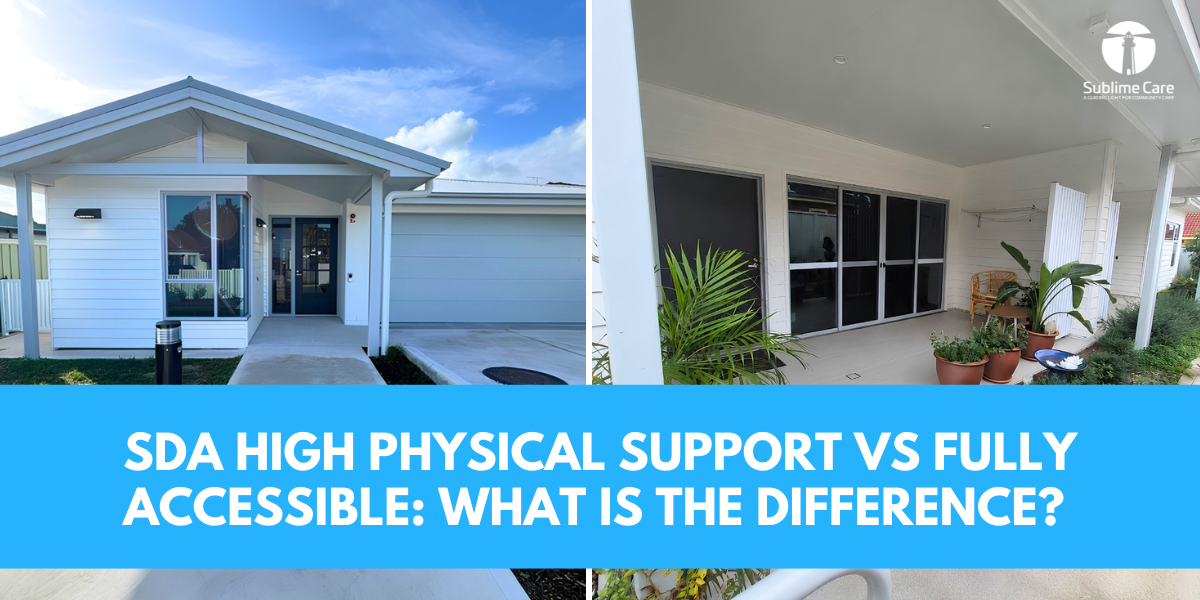
If you or someone you support is exploring Specialist Disability Accommodation (SDA) through the NDIS, you have likely come across two categories that sound similar but serve very different needs: SDA High Physical Support vs Fully Accessible.
Understanding the difference between these two SDA design categories is essential for choosing the right home and securing the right funding in your NDIS plan.
In this guide we break down exactly what each category means, who it is designed for, what design features are included, and how to know which one may be right for you.
What is Specialist Disability Accommodation (SDA)?
SDA housing includes features designed to meet your disability support needs. It is for people with extreme functional impairment or very high support needs, and properties may include wide doorways, wheelchair-accessible kitchen sinks, ceiling hoists, or button-operated doors.
Only around 6 percent of NDIS participants are eligible for SDA. The NDIA decides eligibility after reviewing a Home and Living Supports Request and conducting a detailed assessment.
SDA funds the housing itself — the building. SIL (Supported Independent Living) funds the support workers inside the home. Many participants with very high support needs have both: SDA pays for the building, SIL pays for the workers.
There are four SDA design categories in total: Improved Liveability, Fully Accessible, Robust, and High Physical Support. This article focuses on the two most commonly confused categories — Fully Accessible and High Physical Support.
What is Fully Accessible SDA?
Fully Accessible homes support people with significant physical impairments by providing step-free, mobility-friendly living environments. These homes are built to remove barriers and promote greater independence for individuals who use mobility aids such as manual wheelchairs, walkers, or other supports.
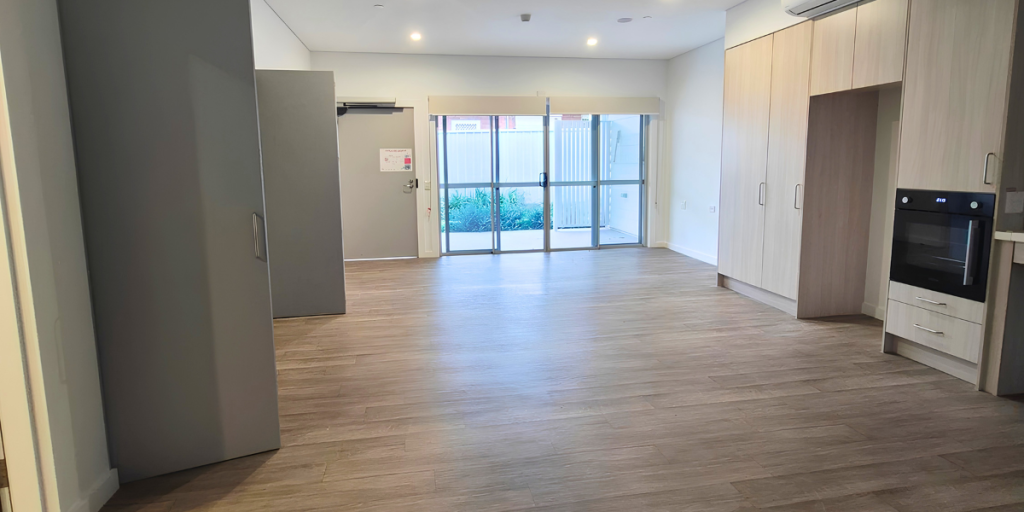
Key design features of a Fully Accessible SDA home include wider doorways of at least 900mm for easier wheelchair access, wider corridors of at least 1.2 metre so you can move comfortably, turning space in living areas so wheelchairs can turn safely, step-free entrance and accessible pathways from parking to the front door, slip-resistant flooring throughout, and wheelchair accessibility in the bathroom, kitchen, and external areas.
Fully Accessible SDA is ideal for participants who have significant physical disability and use mobility aids but are largely able to direct their own care and live with a moderate level of support. These homes empower residents to carry out daily tasks with minimal assistance, making them ideal for those who may need some physical support but are largely independent.
What is High Physical Support SDA?
High Physical Support is the most comprehensive SDA category. As such, this design includes all Fully Accessible features and also adds specific elements for people who use electric wheelchairs, require ceiling hoists, or need intensive physical assistance throughout the day.
In addition, High Physical Support dwellings provide a high level of physical access and support people who require higher levels of assistance. Moreover, these homes include battery backup for assistive technology, additional provision for a ceiling hoist, and potential provision for continuous tracking of a hoist from the bedroom to the bathroom.
Furthermore, High Physical Support housing may also include backup power supply, as well as home automation and communication technology.
In practical terms, this means a High Physical Support home is built for someone who needs more intensive clinical or physical assistance around the clock — not only accessible design, but also a fully equipped environment that can safely accommodate complex care needs.
Key Differences at a Glance
| Feature | Fully Accessible | High Physical Support |
|---|---|---|
| Wheelchair access | Yes | Yes |
| Wide doorways and corridors | Yes | Yes |
| Accessible bathroom and kitchen | Yes | Yes |
| Ceiling hoist provision | No | Yes |
| Backup power for assistive tech | No | Yes |
| Home automation | No | Yes |
| Continuous hoist tracking | No | Yes |
| Best suited for | Significant physical impairment | Very high or complex physical support needs |
Who is Each Category For?
Fully Accessible SDA may be right for you if:
- You have a significant physical impairment and use a manual wheelchair or mobility aid
- You need accessible design features to live more independently
- You can direct your own care and live with moderate support
- Your functional needs do not require ceiling hoists or clinical-grade technology
High Physical Support SDA may be right for you if:
- You have very high or complex physical support needs
- You use a power wheelchair or require ceiling hoist transfers
- You need assistive technology and home automation to manage daily living
- You require 24/7 support including overnight active or sleepover support
How is SDA Funded and What Do You Pay?
The NDIS includes SDA funding in your plan and pays it directly to the SDA provider to cover the building itself, not your support workers.
As of March 2026, the Maximum Reasonable Rent Contribution for a single NDIS participant in SDA is approximately $516.10 per fortnight — around $258 per week or $13,418 per year. This is calculated as 25% of the Disability Support Pension base rate plus 25% of the Pension Supplement plus 100% of any Commonwealth Rent Assistance you are entitled to.
SDA price limits range from around $20,000 per year for legacy stock at the lowest design category up to over $130,000 per year for High Physical Support new builds in capital city locations.
How Do You Get SDA Funding Approved?
You do not just pick your SDA category. The NDIA approves a category based on evidence from your Occupational Therapist, your Support Coordinator, and any specialists involved in your care. Your OT conducts a Functional Housing Assessment that examines your current functional capacity — what you can and cannot do.
In 2026, planning discussions place stronger emphasis on functional evidence. This means detailed reports and assessments are critical when applying for SDA funding.
If you are unsure which category you may be eligible for, speaking with your Support Coordinator or an experienced OT is the best starting point.
SDA Vacancies Available in Wallsend, Newcastle
Sublime Care currently has SDA vacancies available at our purpose-built property in Wallsend, NSW — offering both Fully Accessible and High Physical Support options to suit different needs.
Main House — Wallsend
- 3-bedroom home with 1 vacancy available
- Suitable for male or female participants aged 18 and over
- Requires Fully Accessible SDA funding
Villa 1 — Wallsend
- 1 vacancy available
- Male or female participants
- Requires High Physical Support SDA funding
Both properties are purpose-built for SDA participants and provide the perfect blend of independence and community living in a quiet residential setting in Wallsend, close to shops, transport, and essential services.
View full property details: SDA Vacancy Wallsend
Conclusion
Choosing between Fully Accessible and High Physical Support SDA is not always straightforward, but understanding the design features and who each category is built for makes the decision much clearer. Fully Accessible is designed for people with significant physical impairment who need an accessible home to live more independently. High Physical Support goes further — incorporating ceiling hoists, assistive technology, backup power, and home automation for people with very complex physical needs.
If you are exploring SDA options in Newcastle or the Hunter Region, Sublime Care is here to help. Our team can guide you through the eligibility process, connect you with the right allied health professionals, and help you find a home that truly fits your needs.
📞 02 4911 2380
✉️ ndis.referral@sublimecare.com.au
🌐 www.sublimecare.com.au