
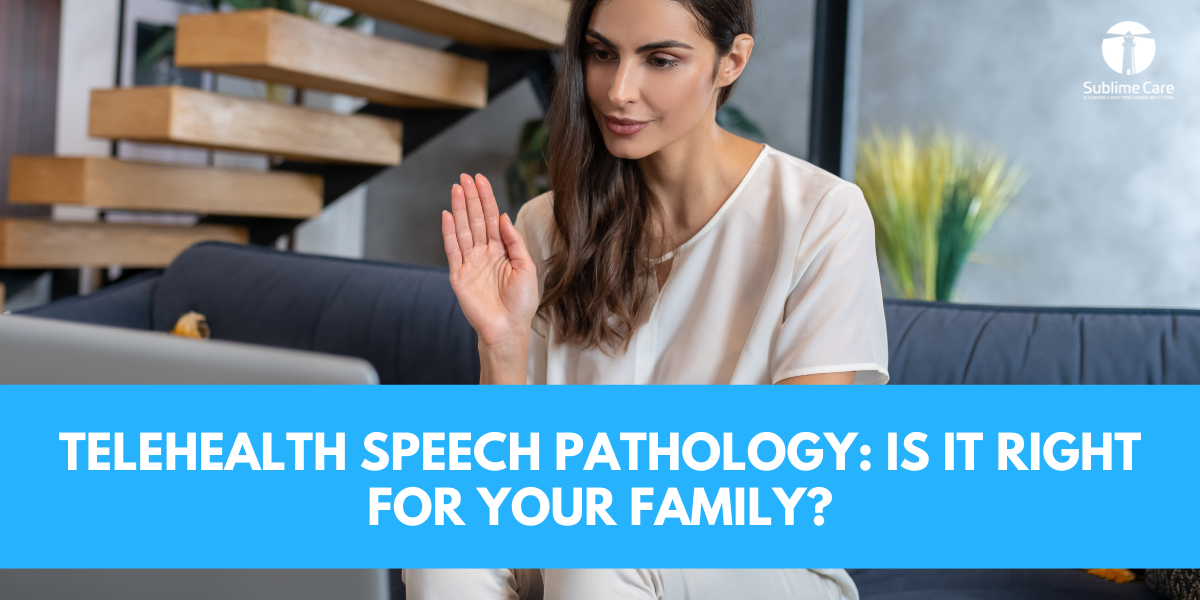
Telehealth speech pathology is a way of receiving speech and language therapy through video calls rather than in person. It is a recognised, funded service model in Australia that supports both assessments and ongoing therapy for children and adults. For many families, telehealth removes travel, waiting rooms, and local availability barriers while providing the same clinical support as in-person sessions.
If you are weighing up whether telehealth is the right fit for your family, here is what to consider.
What Is Telehealth Speech Pathology?
Telehealth speech pathology delivers the same core services as an in-clinic appointment through a secure video platform. These services include assessment, diagnosis, and therapy for speech, language, communication, and swallowing difficulties. A qualified speech pathologist guides the session in real time, often using shared screens, digital resources, and simple at-home materials a parent or carer sets up in advance.
The service is not a lesser substitute for in-person therapy. It is a different delivery format for the same clinical process, built around the same assessment tools, therapy techniques, and reporting standards a speech pathologist would use in a clinic.
How Does a Session Work?
A typical session runs much like an in-person appointment. The speech pathologist greets the client and works through planned activities tailored to their goals. Where needed, they involve a parent or support person to help the child stay engaged. Sessions typically last 30 to 60 minutes, while speech pathologists track and report progress just as they do in-person.
Before the first session, most providers will send a short checklist covering the platform and any materials you need to have on hand. This may include printed worksheets, favourite toys, a quiet space, and instructions for testing your camera and microphone in advance. This preparation matters more for telehealth because connection issues or distractions can affect how engaged a child remains during sessions.
Who Is Telehealth Suitable For?
Telehealth works well for many participants, but it is not universally the best fit. It tends to suit:
- Families in regional or outer-metro areas with limited access to a local speech pathologist.
- Clients who already work with a speech pathologist and want to continue their therapy without starting from scratch.
- Children and adults working on language, literacy, social communication, stuttering, or voice goals, where a screen-based format does not limit the activity.
- Families who need to fit therapy around school, work, or other appointments can benefit from telehealth because they don’t need to spend time travelling to and from appointments.
- Participants who find a home environment more comfortable or less overwhelming than a clinical setting.
It may be less suitable for clients who need hands-on oral-motor or feeding support or who have significant difficulty attending to a screen. A first assessment may also benefit from an in-person setting to help build rapport. A good speech pathologist will discuss this with you and may recommend a mix of telehealth and in-person sessions rather than one or the other exclusively.
What Are the Benefits?
Telehealth speech pathology offers several practical advantages:
- Access: Families outside major centres, or those without transport, can see a speech pathologist without relocating that need.
- Consistency: Illness, weather, or scheduling clashes are less likely to cancel a session outright, since there is no travel involved.
- Real-world practice: Therapy happens in the home environment, so strategies can be practised in the same setting where communication challenges show up day to day.
- Reduced disruption: No travel time means less time away from school, work, or other commitments.
- Family involvement: Parents and carers often participate more directly in a home-based session, which can help strategies carry over into daily routines between appointments.
What Are the Limitations to Consider?
Telehealth is not the right fit for every goal or every participant, and it is worth being realistic about where it falls short. Some therapy goals depend on physical, hands-on techniques, such as oral-motor exercises for feeding and swallowing difficulties, which are difficult to guide safely over video. Very young children, or clients with limited attention for screen-based activities, may also engage better in person, at least initially.
Technology also plays a role. A stable internet connection and a reasonably quiet space help sessions run smoothly, but not every household has access to these. Families considering telehealth should discuss their goals and home setup with a speech pathologist. They can then advise whether telehealth, in-person therapy, or a blended approach will best support the client’s needs.
Is Telehealth Speech Pathology Covered by the NDIS?
Yes. The NDIS can fund telehealth speech pathology in the same way as in-person therapy when a registered or NDIS-recognised speech pathologist delivers the service and the participant’s plan includes funding for the relevant capacity-building supports. If you are unsure whether your plan covers telehealth, speak with your support coordinator or the provider’s intake team before your first session to confirm your options.
How Sublime Care Delivers Telehealth Speech Pathology
Sublime Care’s speech pathology team supports children and adults across Newcastle, the Hunter, Central Coast, and Sydney. Telehealth is also available for participants who prefer or need this option. Our speech pathologists support communication and language, early intervention, social and cognitive communication, swallowing and feeding, fluency, and assistive technology. We incorporate telehealth into therapy planning from the outset rather than treating it as a fallback option.
If you’re unsure whether telehealth suits your situation, our team can discuss your goals and your child’s or family member’s needs. We can also consider your home setup before recommending the most suitable format. Many participants use a blended approach, attending some sessions in person and others via telehealth. The format can vary each week depending on the goals they need to work on.
Frequently Asked Questions
Does telehealth work as well as in-person speech therapy? For many goals — language, literacy, social communication, stuttering, and voice — evidence and clinical experience show telehealth can achieve comparable outcomes to in-person therapy. Cases involving hands-on oral-motor or feeding support are usually better suited to in-person sessions.
What equipment do I need for a telehealth session? A device with a camera and stable internet connection is generally sufficient. Your speech pathologist will advise on any additional materials, such as printed worksheets or specific toys, before your first session.
Can telehealth and in-person sessions be combined? Yes. Many families use a blended approach, starting or checking in with in-person sessions and using telehealth for regular ongoing therapy, adjusting the mix as goals change.
Is telehealth suitable for very young children? It can be, but engagement varies by age and attention span. A speech pathologist will usually recommend involving a parent or carer directly in the session to help keep a young child engaged, and may suggest starting in person if screen-based sessions are not holding attention.
How do I get started? Contact Sublime Care’s team to discuss your family’s needs, confirm NDIS plan coverage, and arrange an initial appointment, whether telehealth, in-person, or a mix of both suits you best.
If you have a participant who may benefit from speech pathology, reach out to Sublime Care’s team to discuss whether telehealth, in-person, or a blended approach is the right starting point.