
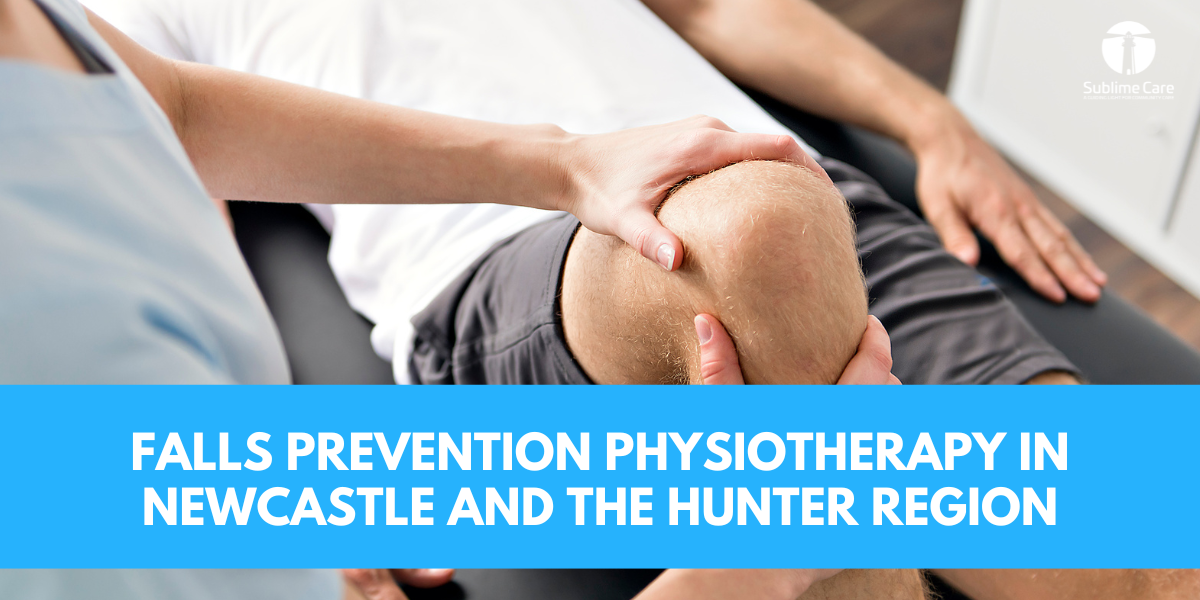
Falls prevention physiotherapy uses structured strength, balance, and mobility exercises to reduce an older adult’s risk of falling. Families across Newcastle and the Hunter Region can access these sessions through home visits or clinic-based appointments. It supports a genuinely mixed caseload, from people on Support at Home budgets to NDIS participants and those funding care privately, because the risk of falls does not follow a single funding pathway.
If you notice changes in a parent’s or family member’s balance, steadiness, or confidence at home, falls prevention physiotherapy may help. Here’s what the therapy involves and how you can access it locally.
Why Falls Prevention Matters
Falls are not a minor issue for older Australians. The Australian Institute of Health and Welfare reported roughly 133,000 fall-related hospitalisations among people aged 65 and over in one year. Falls accounted for 77 percent of all injury hospitalisations in this age group. Older Australians are around eight times more likely to be hospitalised from a fall than people aged 15 to 64, and the average hospital stay following a fall runs close to ten days.
Behind these figures is a simpler reality for families: a fall can make independence feel less certain. This can affect both the person who fell and the family supporting them. Falls prevention physiotherapy exists to intervene before that point, or to rebuild confidence and safety after it.
What Does a Falls Prevention Physiotherapy Program Involve?
A falls prevention program typically starts with an assessment of strength, balance, gait, and any specific risk factors, such as medication effects, vision changes, or home hazards. From there, a physiotherapist builds a program that usually includes:
- Strength and balance exercises targeted at the muscle groups most linked to fall risk, particularly in the legs and core.
- Gait and mobility training, including practising safe movement around stairs, uneven surfaces, and transfers in and out of chairs or beds.
- Home environment review, identifying trip hazards, lighting issues, or areas where rails or other aids might help.
- Ongoing progress reviews, adjusting the program as strength and confidence improve, or as needs change over time.
Because this program continues over time rather than involving a single session, consistency matters. Many families find in-home sessions easier to maintain than repeated trips to a clinic.
Who Can Access This Support?
People who need falls prevention physiotherapy can access it through different funding pathways. Different funding arrangements may apply even within the same family or household. A mixed aged care caseload typically includes:
- Support at Home participants, whose quarterly budget can fund allied health support including physiotherapy, delivered alongside other everyday care.
- NDIS participants under 65 with a disability affecting balance or mobility, where physiotherapy is funded under capacity-building supports.
- Privately funded clients, including people not yet accessing government-funded aged care, or topping up existing support.
- CHSP (Commonwealth Home Support Programme) clients, accessing lower-intensity, entry-level supports.
A good local provider works across all of these funding types, so families are not forced to change physiotherapists as circumstances or funding arrangements change.
Signs Your Loved One May Benefit From Falls Prevention Physiotherapy
Families are often the first to notice small changes before a fall happens. Common signs worth acting on include holding onto furniture or walls more often, hesitating on stairs, or walking more slowly or unsteadily. A recent near-miss or fall, or reluctance to leave the house due to fear of falling, also warrants attention. None of these on their own mean a crisis is imminent, but together they are a reasonable prompt to arrange an assessment rather than wait for a fall to force the issue.
What Makes Local, In-Home Physiotherapy Different?
For families across Newcastle and the Hunter Region, local in-home physiotherapy can remove some of the biggest barriers to consistent care. It reduces travel time, mobility challenges when visiting a clinic, and the disruption of leaving a familiar environment. Exercises and strategies can also match the client’s actual home, focusing on the stairs, bathroom layout, or hallway they use every day. This approach provides a more practical alternative to a generic clinic setup. For families juggling work and caregiving, having a physiotherapist come to a parent or family member also reduces the coordination burden of getting someone to and from appointments.
Physiotherapy Across Newcastle and the Hunter Region: What to Expect
Families new to this type of support can generally expect an initial assessment to confirm their goals and funding. A home visit then helps the physiotherapist assess mobility in the client’s living environment and adjust the program over time. Session frequency depends on individual risk and goals, and a good provider will explain this clearly rather than defaulting to a standard package regardless of need.
How Sublime Care Supports Mobility and Falls Prevention
Sublime Care’s physiotherapy team supports a mixed aged care caseload across Newcastle and the Hunter Region, working with clients funded through Support at Home, the NDIS, CHSP, and private arrangements. Our physiotherapists deliver mobility and falls prevention programs in the home, tailored to each client’s environment and goals. We can adjust the program over time as the client’s needs change.
Frequently Asked Questions
How common are falls among older Australians? Falls are the leading cause of injury hospitalisation among Australians aged 65 and over, accounting for around 77 percent of injury hospitalisations in this age group, according to AIHW data.
Is falls prevention physiotherapy covered by Support at Home or the NDIS? Yes. Physiotherapy is a funded allied health support under Support at Home quarterly budgets and NDIS capacity-building supports. Funding depends on what the individual’s plan or budget includes.
Does physiotherapy for falls prevention happen at home or in a clinic? Both are usually available. Many families in Newcastle and the Hunter Region choose in-home sessions so therapists can tailor exercises and safety strategies to their living environment.
What are early signs someone might benefit from falls prevention support? Holding onto furniture more than usual, hesitating on stairs, a slower or unsteady walking pace, a recent near-miss, or growing reluctance to leave the house are all reasonable prompts to arrange an assessment.
Can one physiotherapist support family members with different funding types? Yes, provided the provider works across Support at Home, NDIS, CHSP, and private arrangements, which avoids families needing separate providers for each funding pathway.
If you have noticed changes in a family member’s balance or mobility, reach out to Sublime Care’s physiotherapy team across Newcastle and the Hunter Region to discuss an assessment.