
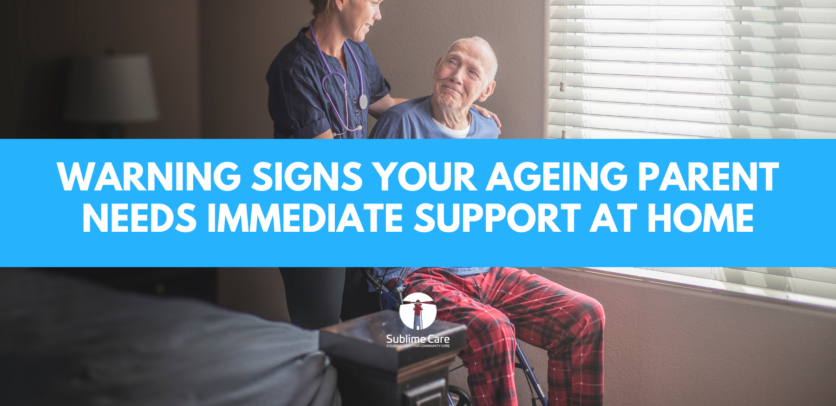
Noticing early warning signs in an ageing parent can be difficult. It is easy to dismiss small changes as a normal part of getting older. However, these moments often signal a genuine need for support. Acting early leads to better outcomes, greater choice, and less risk of a crisis. The good news is that support is available. Australia’s Support at Home (SAH) program is designed to help the elderly remain safe, comfortable, and independent in their own home.
Does something feel unmistakably off while visiting your parents? Perhaps it is time to pay closer attention and explore the available care options under Support at Home. Read on to learn more.
Small Changes That Signal a Big Need for Support at Home
When it comes to ageing, the early signs of declining independence are rarely obvious. They tend to appear gradually as small shifts in routine, appearance, or behaviour that are easy to overlook or explain away. Knowing what to look for is the first step toward getting your parents the right assistance at the right time. Here are the 10 telltale signs you should watch out for:
They are Struggling to Maintain the House
Dishes left unwashed, overflowing bins, and an overgrown garden can indicate reduced energy, mobility issues, or early cognitive decline. Domestic neglect is often the first visible sign that daily living has become a struggle. If you notice any changes, Support at Home is there to provide practical assistance to your parents.
They are Struggling with Personal Hygiene
This can be a sensitive area, but changes in personal hygiene often signal physical pain, mobility limitations, or depression. It deserves a compassionate and prompt response to address any underlying issues properly. In this regard, Support at Home is definitely an option you may take into consideration.
The Fridge Is Empty or Full of Expired Food
An empty fridge, expired food, or a parent who has noticeably lost weight can signal that shopping and meal preparation have become too difficult to manage alone. This is an early but important indicator that Support at Home may be needed.
They’ve Had a Recent Fall or Near-Miss
A recent fall or even a near-miss is one of the most serious signs that something needs your attention. Falls are the leading cause of injury hospitalisation among older Australians, and a single incident is often an indicator of a deeper issue with mobility, balance, or home safety.
They Are Becoming More Forgetful Than Usual
While some memory changes are a normal part of ageing, consistent lapses can signal cognitive decline that requires structured assistance. Early intervention here can make a significant difference, so exploring the clinical support services available under Support at Home sooner rather than later is strongly encouraged.
They’ve Stopped Doing Things They Used to Love
Such scenarios are often linked to mobility loss, transport difficulties, or the early stages of depression. Staying socially and mentally active is essential to healthy ageing. Therefore, something is not quite right if your parents have suddenly become reluctant to engage in the hobbies and social activities that were once a regular part of their routine.
Getting Around Has Become Difficult
If your parents are visibly struggling to move around, this is a sign that Support at Home may already be needed. Mobility difficulties are often brushed off as a normal part of ageing, but it can quickly lead to isolation and further physical decline if left unaddressed.
They Seem Lonely or Emotionally Withdrawn
A parent who has become noticeably quieter, sadder, or more emotionally distant is showing a sign that should not be ignored. Loneliness in older Australians is directly linked to faster cognitive decline and poorer physical health, making emotional withdrawal one of the most telling signs that additional support at home is needed.
Managing Money and Paperwork Has Become Overwhelming for Them
Struggling to keep up with bills, paperwork, and financial decisions is more than a minor inconvenience. Oftentimes, it is one of the earliest and most reliable signs of cognitive decline. If this is becoming a regular occurrence, your parents may need more attention and support at home.
They Are Telling You They’re Fine, But You Know They’re Not
Many older Australians resist asking for help out of fear of losing their independence. What they may not realise is that Support at Home is not about taking independence away but rather giving them the freedom to continue living life on their own terms while receiving the care they need. If something does not feel right, take the time to sit down with your parents and have an open conversation.

What to Do When You Notice Any of These Signs
Recognising the signs is important, but knowing what to do next is just as important. If something feels off during a visit to your parents, do not wait for things to get worse. Here is a simple guide to help your family take the right steps forward.
- You know your parents better than anyone. If something feels off during your visit, trust that feeling. Your instincts as a family member are often the earliest and most reliable indicator that something needs attention.
- Before making any decisions, sit down with your parents and talk. Share what you have noticed and listen to how they feel. A calm and open conversation is always the best place to start.
- A visit to your parents’ family doctor is one of the most important steps you can take early on. The doctor can conduct a thorough health assessment, identify any underlying concerns, and refer your parent to the appropriate services if needed, such as Support at Home.
- Contact My Aged Care to explore and access aged care services. Doing so will determine your parents’ eligibility and funding classification under the Support at Home program. You may call 1800 200 422 or visit their website to arrange a free assessment.
- Last but not least, find a dedicated provider that listens, plans, and delivers quality services aimed at improving the overall health and well-being of your parents. If you are looking for a trusted Support at Home provider in Newcastle or across NSW, Sublime Care is here to help.
Final Thoughts
The signs are not always obvious, but they are always there. They show up quietly in an untidy home, a missed meal, or a conversation that trails off too soon. These small changes matter because they often point to something bigger that deserves your attention. But don’t worry. You don’t have to face this kind of situation alone. Australia’s Support at Home program exists precisely to provide tailored assistance to help older Australians remain safe, comfortable, and independent at home.
Sublime Care has been supporting families around Newcastle and across NSW with personalised, compassionate, and helpful aged care services. We believe that every older Australian deserves care that respects their independence and dignity, so we are here to make that happen. For enquiries about our Support at Home services, you may email us at sah.referral@sublimecare.com.au or call 02 4915 9627.